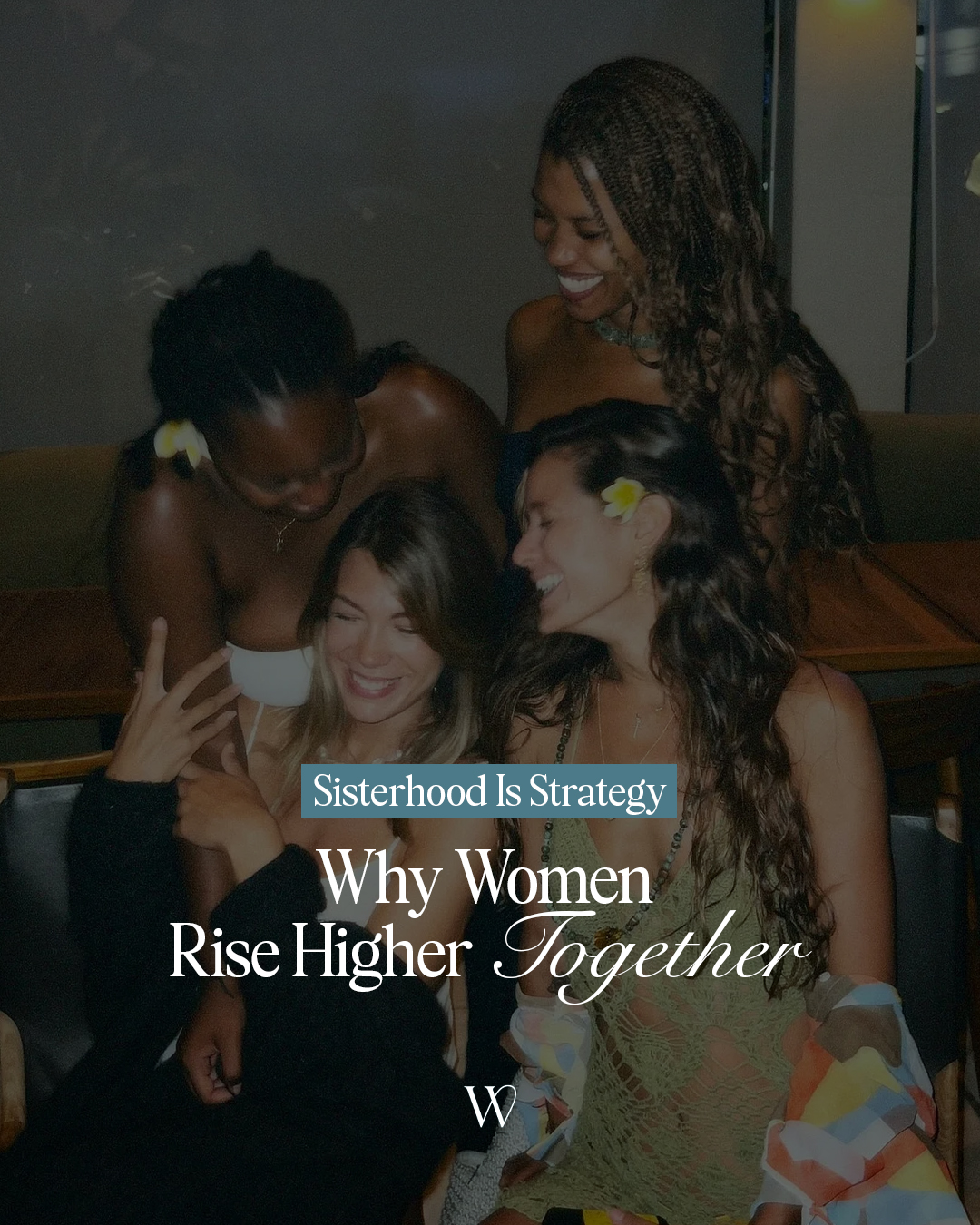

Sisterhood Is Strategy: Why Women Rise Higher Together
Forget the myth of the lone wolf. Success isn’t a solo sprint, even for the fiercest women on the planet. Women who support other women aren’t just being nice; they’re being strategic, intentional, and powerful. This is sisterhood in action. 🌿
And yes, the data backs it up.
Across industries and sectors, women with strong networks and mentors advance more, feel more confident, and sustain their well-being longer than women who try to go it alone. When women unite, individual and collective success doesn’t just happen; it accelerates.
Sisterhood Isn’t Soft. It’s Strategic.
Studies on women’s careers show one clear truth: networking and support systems are not optional extras; they’re essential. A survey of women leaders found that over 80% use networking to advance their careers, whether that’s breaking into C-suite roles, landing board seats, or securing higher pay.
Yet, despite these clear advantages, formal mentorship remains surprisingly rare, and when women do have mentors, they’re significantly more likely to achieve leadership milestones than those who don’t.
This isn’t old-school “girl power” sentiment. It’s strategic human behavior backed by evidence: women with strong support networks gain access to knowledge, confidence, and opportunities they might otherwise miss.
Networks That Nourish Mental Health Too
Supportive connections don’t just fuel careers; they also fuel well-being. Evidence from community research shows that women participating in supportive groups experienced significant reductions in anxiety and depression symptoms and improved self-care knowledge.
Women with strong social ties also show greater emotional resilience, lower rates of depression, and higher overall life satisfaction, real psychological outcomes that come from feeling understood and supported.
This is sisterhood as a mental health resource, not just a career booster.
Why Collaboration Beats Competition
One of the biggest myths women face is that they have to compete with each other for scarce opportunities. But research suggests the opposite. Women’s networks, especially when they are deep, intentional, and reciprocal, help create a sense of belonging, amplify voices, and make career paths clearer and more inclusive.
In workplaces where women receive the same career support as men, differences in ambition and advancement begin to disappear. That means support, not just solo hard work, is part of closing gaps.
How to Build a Supportive Sisterhood
Now for the good stuff: how to cultivate your own network that lifts as it climbs:
- Be intentional. Invest in relationships that challenge, support, and inspire you.
- Share first. Offer help, advice, or a listening ear without waiting for reciprocity.
- Celebrate wins loudly. When women succeed, amplify them across platforms and rooms.
- Stay consistent. Networks grow through repeated connection, not just occasional meetups.
A supportive network isn’t just about contacts on LinkedIn. It’s about real human alignment: people who speak truth, offer perspective, and open doors because they want you in the room.
Sisterhood Is Not Optional; It’s Empowerment
In a world where women still face systemic barriers and burnout, connection is more than a nicety; it’s a tool for resilience, growth, and long-term success. When women help each other thrive, everyone rises a little higher.
So build your circle with intention. Show up for other women with curiosity and generosity. Recognize that your success grows with theirs.
In a culture that constantly tells women to stand alone, sisterhood says something radically different:
Together, we are unstoppable. ✨
Sources:
• Chief survey on women leaders and networking (Business Wire): https://www.businesswire.com/news/home/20230719423838/en/Chiefs-Study-Finds-80-of-Women-Leaders-Use-Networking-to-Drive-Career-Success
• McKinsey insights on women, networks, and career support: https://www.mckinsey.com/capabilities/people-and-organizational-performance/our-insights/women-in-the-workplace
• Social support groups and women’s mental health outcomes: https://pubmed.ncbi.nlm.nih.gov/40816797/