
6:00 AM feels like a quiet promise I make to myself every weekday, a promise that if I leave early enough, I might just outsmart the city. I slip out of my apartment with that fragile optimism, only to find myself swallowed by the same familiar scene: buses already full, stops that seem endless, and traffic that moves with all the urgency of a paused playlist. Somewhere between gripping my bag and mentally calculating if I’ll make it on time, I start negotiating with myself. Do I stay on this overcrowded bus and hope for a miracle, or do I give in and book a mototaxi that I know will get me there faster? By the time the workday ends, the script flips but the struggle stays the same. Stations overflow, lines stretch like they have no ending, and the exhaustion of the day settles in just as the real challenge begins: getting home. More often than not, I cave, book that mototaxi, and feel that small, victorious thrill as we cut through traffic like we’ve unlocked a secret level in the city.
It turns out, this daily tug-of-war between patience and practicality isn’t just my personal narrative, it’s a global pattern backed by research. Studies from the World Bank show that traffic congestion in major cities doesn’t just test our patience, it quietly drains economies through lost productivity, wasted fuel, and hours that could have been spent more meaningfully. Meanwhile, insights from McKinsey & Company reveal that improving urban mobility systems can reduce commute times by as much as 20 to 30 percent, a shift that doesn’t just make life easier but tangibly improves how cities function. Suddenly, my everyday commute feels less like a personal inconvenience and more like a shared experience woven into a much bigger, data-backed reality.
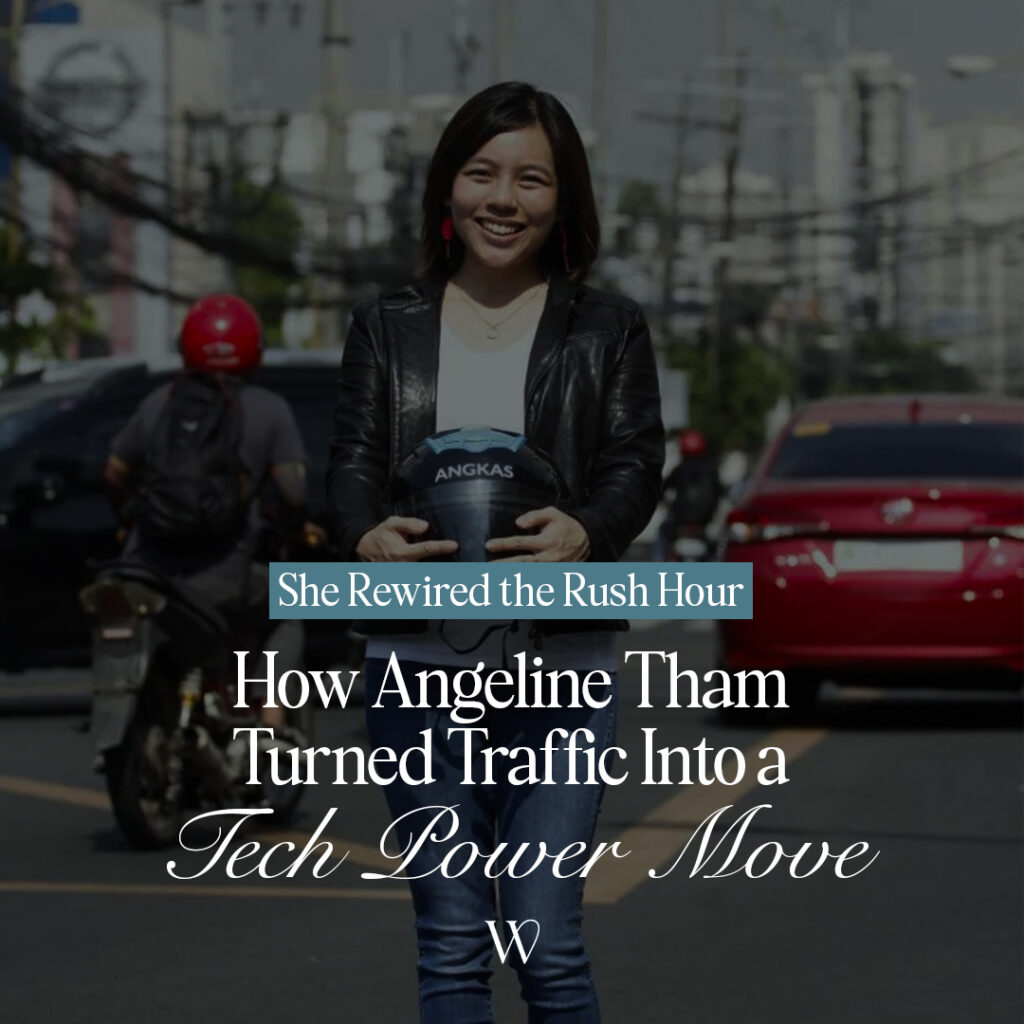
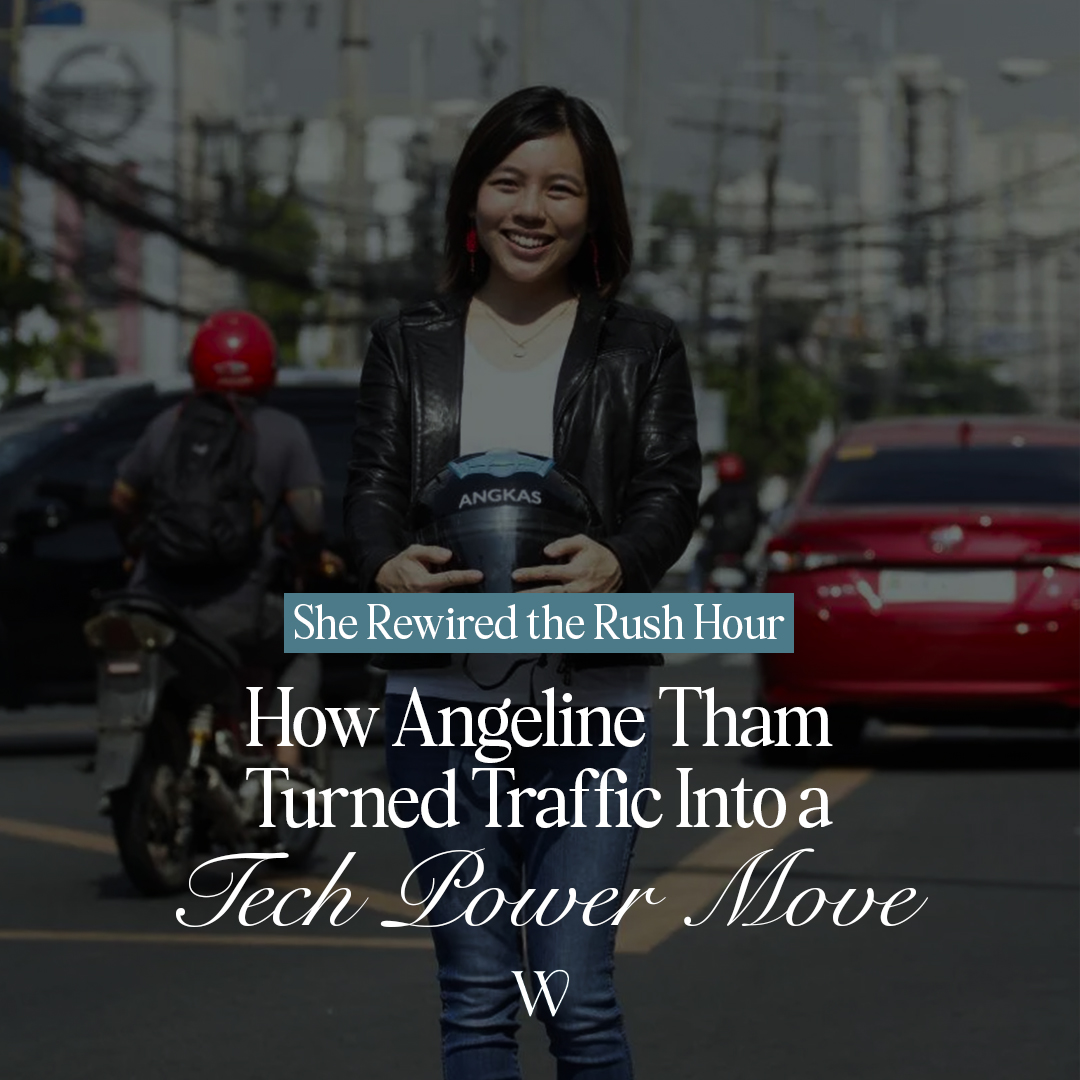
Somewhere within that reality is Angeline Tham, a woman who looked at the same gridlock I face daily and saw not a dead end, but an opportunity waiting to be refined. As the founder of Angkas, she transformed a simple, almost overlooked idea into a tech-enabled solution that feels both intuitive and revolutionary. Instead of trying to eliminate traffic entirely, she worked around it, recognizing that motorcycles already had a natural advantage in congested streets. By pairing that reality with technology, she created a system that offers commuters something they’ve long been chasing: control over their time.
What makes her story resonate so strongly is how seamlessly it aligns with what research has been saying all along. People are not just looking for transportation, they are looking for efficiency, predictability, and a way to reclaim the minutes that slip away in traffic. In a world where time often feels like the most expensive currency, solutions like Angkas do more than provide convenience; they restore a sense of agency. It’s a reminder that innovation doesn’t always mean creating something entirely new. Sometimes, it’s about observing what already exists, understanding the gaps, and building a smarter bridge between problem and solution.
Angeline’s journey feels like a blueprint for modern entrepreneurship. It embodies that “plug in, level up” mindset, where technology isn’t just layered on top of a problem but is used to unlock a better way of navigating it. Her approach highlights a subtle but powerful shift in thinking: instead of forcing cities to adapt to rigid systems, we can design flexible solutions that adapt to how people actually move. The result is not just faster commutes, but a more human-centered approach to urban living, one that values time, energy, and well-being as much as efficiency.
In industries like tech and transport, where female leadership is still underrepresented, Angeline’s presence carries a quiet kind of power. She didn’t need to disrupt loudly to make an impact; she simply understood the problem deeply enough to solve it effectively. Her work reflects a blend of insight, resilience, and clarity, qualities that often go uncelebrated but are essential in building something that lasts. It’s a reminder that leadership doesn’t always announce itself, sometimes it moves steadily, confidently, and with purpose.
For someone like me, navigating the daily rhythm of commuting, the impact of her innovation feels immediate and personal. That mototaxi ride is more than just a faster option, it’s a pocket of relief in an otherwise demanding day. It saves time, yes, but it also preserves energy, reduces stress, and occasionally even proves to be more cost-efficient when I consider the hidden costs of long, unpredictable commutes. It transforms what used to feel like an unavoidable struggle into something I can manage, and on good days, even outsmart.
The WYLD Tech Takeaway
Frustration has a way of disguising itself as something we’re meant to endure, but more often than not, it’s pointing toward something that can be improved. Angeline Tham saw beyond the standstill and built movement where there was none, proving that even the most ordinary challenges can spark extraordinary solutions. Consider this article your quiet nudge to look at what slows you down and ask a different question, not “how do I survive this?” but “how can this be done better?” Because sometimes, the path forward isn’t about waiting for change, it’s about creating it.
Sources:
- https://newsinfo.inquirer.net/1767897/angkas-founder-angeline-tham-empowers-women-during-global-summit
- https://etradeforall.org/et4women/advocates/angeline-tham
- https://www.worldbank.org/en/results/2024/03/13/promoting-livable-cities-by-investing-in-urban-mobility
- https://www.consultancy.asia/news/1047/mckinsey-global-report-shows-social-gains-through-smart-city-technology
Bio:
Paula Mae Caparic is a WYLD writer who can write about almost anything, especially if it sparks a question worth asking. Her work blends research, analysis, and personal insight, often with a sense of humor and a dash of sass.