
Love stories are usually deemed more powerful when they overcome obstacles, with the couple standing strong despite all the challenges thrown their way.
Take Romeo and Juliet. Despite coming from warring families, they fell in love, choosing untimely deaths rather than live life apart. Then there’s Rose and Jack, who find love aboard the doomed Titanic ship, where Jack proves his devotion by sacrificing his life to keep Rose safe.
But what happens if the “obstacle” in the couple’s way is the person that they’re currently in a relationship with?
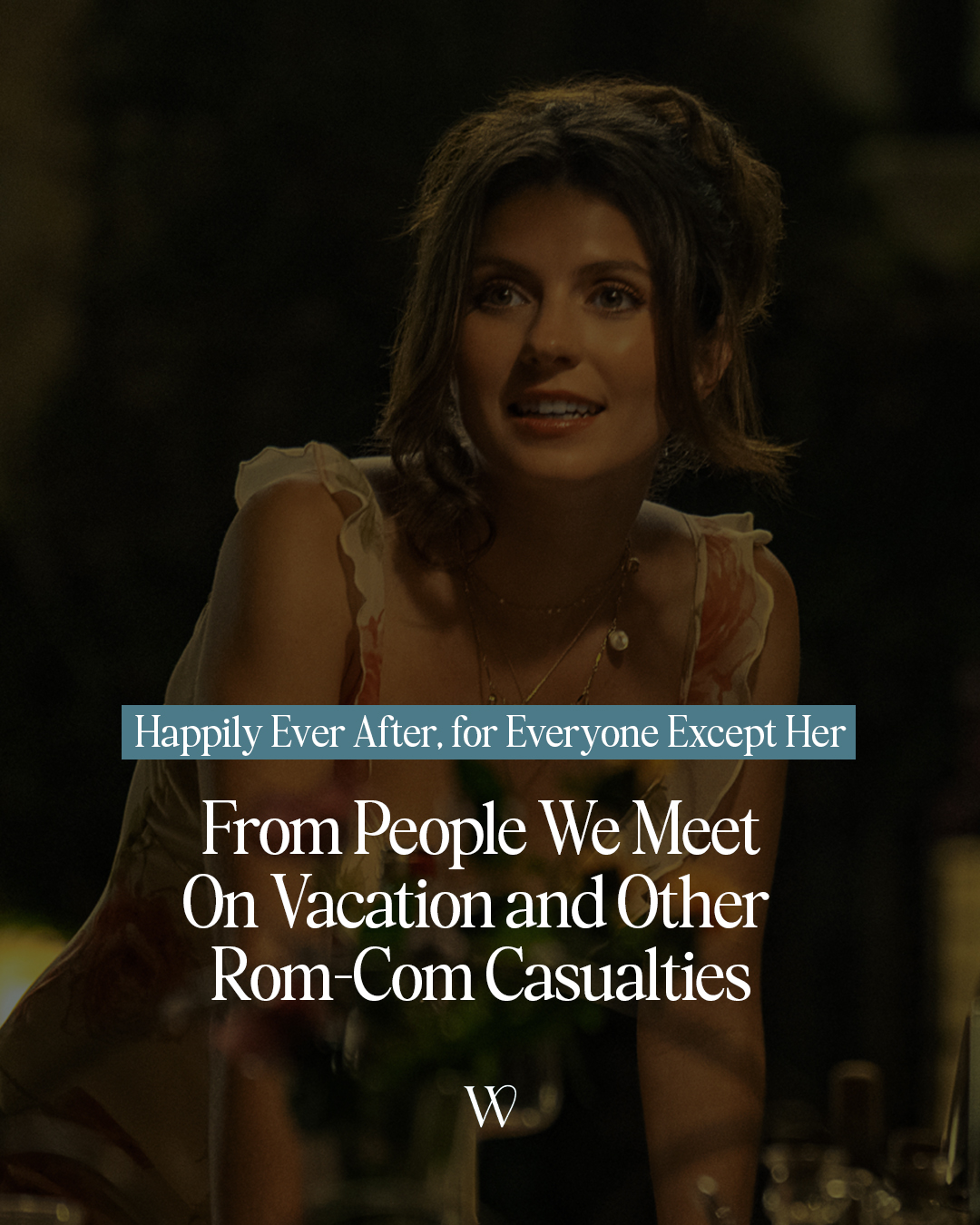
The much-anticipated film People We Meet On Vacation (based on the book of the same title by Emily Henry) is the perfect example of this scenario. The film begins in the aftermath of the lead couple’s estranged friendship, having not spoken for years despite being best friends for a long time.
And then, we see their beginning: free-spirited Poppy meets organized Alex, and they are confined in a car on a long road trip to their hometown. There are sparks and chemistry between the two, but then comes the needle drop: Alex has a girlfriend.
“Doesn’t mean we can have casual sax,” Poppy jokes, and she’s cool with the fact that Alex has a girlfriend. They platonically spend the night together, sharing more about themselves and becoming friends in the process.
We see them becoming best friends through the years, promising to go on annual summer vacations, just the two of them. For a film titled People We Meet On Vacation, they barely meet anyone else. Each vacation brings Poppy and Alex closer, with Poppy pushing Alex to indulge in adventures that he wouldn’t dare do in his mundane daily life.
Their partners sometimes join some vacations, the perfect foil to Poppy and Alex’s building romantic tension. Sarah, Alex’s longtime on-off girlfriend, joins them on their last vacation before the fallout, and we see why: Alex and Poppy have more chemistry than Sarah and Alex, who just seem to be together for stability. Poppy and Alex almost kiss, but the morning comes, and we find out that Sarah and Alex just got engaged.
Of course, Poppy and Alex still end up together.
It takes them another vacation (or rather, a destination wedding) to do so, but they ultimately realize that each other is who they want to spend their vacations and the rest of their life with.
And Sarah? She does run into Poppy after her breakup with Alex, and we see her finally having the chance to discover herself and her own passions beyond the stability and comfort she thought she wanted with Alex.
Everything ends up working well for everyone. But did it?
In People We Meet On Vacation, Sarah is a character looming over the narrative. We don’t actually see her until the latter part of the film, but her presence in the story is the reason why Poppy and Alex have a romantic tension between them, but never cross the line.
Things work out for Sarah and for Poppy and Alex, but it can’t be denied that while Poppy and Alex’s story is a romance, Sarah’s was a horror movie: doomed to fall second place to a girl best friend that her boyfriend always calls and texts during their dates, who he even leaves her for while in vacation in romantic Italy, all because the said girl best friend needs comfort.
Sarah doesn’t even do anything wrong. She’s not evil, and she’s not hostile to Poppy despite the boundaries her friendship with Alex dangerously tiptoes. She even understands and supports Alex as she leaves her to go and comfort Poppy! She’s a perfectly good woman who just so happened to be in the way of the lead couple finally getting together.
This isn’t just confined to movies.
In break up with your girlfriend, i’m bored, Ariana Grande knows that pining for a taken man is wrong (“I know it ain’t right, but I don’t care”), but she still goes for it anyway. Avril Lavigne even puts down the current girlfriend in the hopes that she gets chosen by the man, as she sings in Girlfriend, “she’s like, so whatever, you could do so much better. I think we should get together now.”
Sometimes, in the same People We Meet On Vacation fashion, pop culture tries to work things out for all parties involved.
In Enchanted, a princess-to-be finds herself out of animation land and into chaotic New York, where she meets a jaded man, who is, surprise, already engaged. Her whimsical nature teaches him to find joy in his life and helps him get closer to his daughter. They fall in love, even defeating an evil witch in the process. It’s just so convenient that the princess-to-be’s fiancé, who gallantly travels to New York to save her, happens to fall in love with the jaded man’s fiancée.
Since this is a Disney movie, the switching of the couple’s partners is glossed over and portrayed as them finding the right person for themselves. But let’s face it: will this kind of entanglement work in real life? What would have happened if the prince hadn’t liked the leading man’s fiancée? Was she just supposed to stop planning their wedding and accept that her man has found her happily ever after, who is not her?
There are also films where the “other woman” triumphs, like My Best Friend’s Wedding. When she realizes that she’s in love with her best friend, Julia Roberts’ character wreaks havoc on the engagement, and she almost succeeds. In the end, though, her best friend still chooses the “other woman,” which is essentially his fiancée. The film is seen from the perspective of Julia Roberts’ character, and while she is portrayed as flawed, her redemption arc is propelled by her best friend’s fiancée confronting her about her meddling.
In Rosaline, we see the other party to Romeo and Juliet. And by “other party,” this just means that she was Romeo’s original romantic interest, before he fell in love at first sight with Juliet. While she’s an unseen character in the original Romeo and Juliet story, forgotten so we could focus on the main star-crossed lovers, the film Rosaline finally gives her a chance to be a protagonist in her own story. In the end, she gets her own journey and romantic interest, while Romeo and Juliet, well, you already know how that ends.
In these songs and films, the ‘other women’ aren’t even mistresses.
They’re already the main characters in their own relationships. But since the perspective we see is usually from the main couple, we see these women become emotional casualties. Because romcoms and pop songs champion the yearners, the ones who just realized they loved their best friends, the meet-cute benefiters, these women in these already-existing relationships become just another obstacle for the main couple to overcome on their journey to professing their undying love for each other.
Sure, sometimes the breakup happens early on, so the “main couple” is free from the burden of cheating, but more often than not, the great love story is a byproduct of emotional cheating on one or both leads’ parts.
These “other women” are just victims themselves. They lose because the long-term stability they provide isn’t enough compared to the exciting new relationship. The memories they forged pale in comparison to the grand gestures and serendipitous happenings in the main couple’s love story.
Sometimes, they fight for their man and win, but most of the time, they lose the relationship.
A love story may crown its winners in the final act, but it’s worth asking how romantic it really is when someone else had to quietly lose for it to feel like a happy ending.
Bio:
Sanne is a marketer by profession and a writer by passion who loves writing about women, lifestyle, and culture, from movies and music to theater and the arts. When she’s not working, she’s either working through her TBR pile, planning her next trip, or forcing her cats to cuddle.