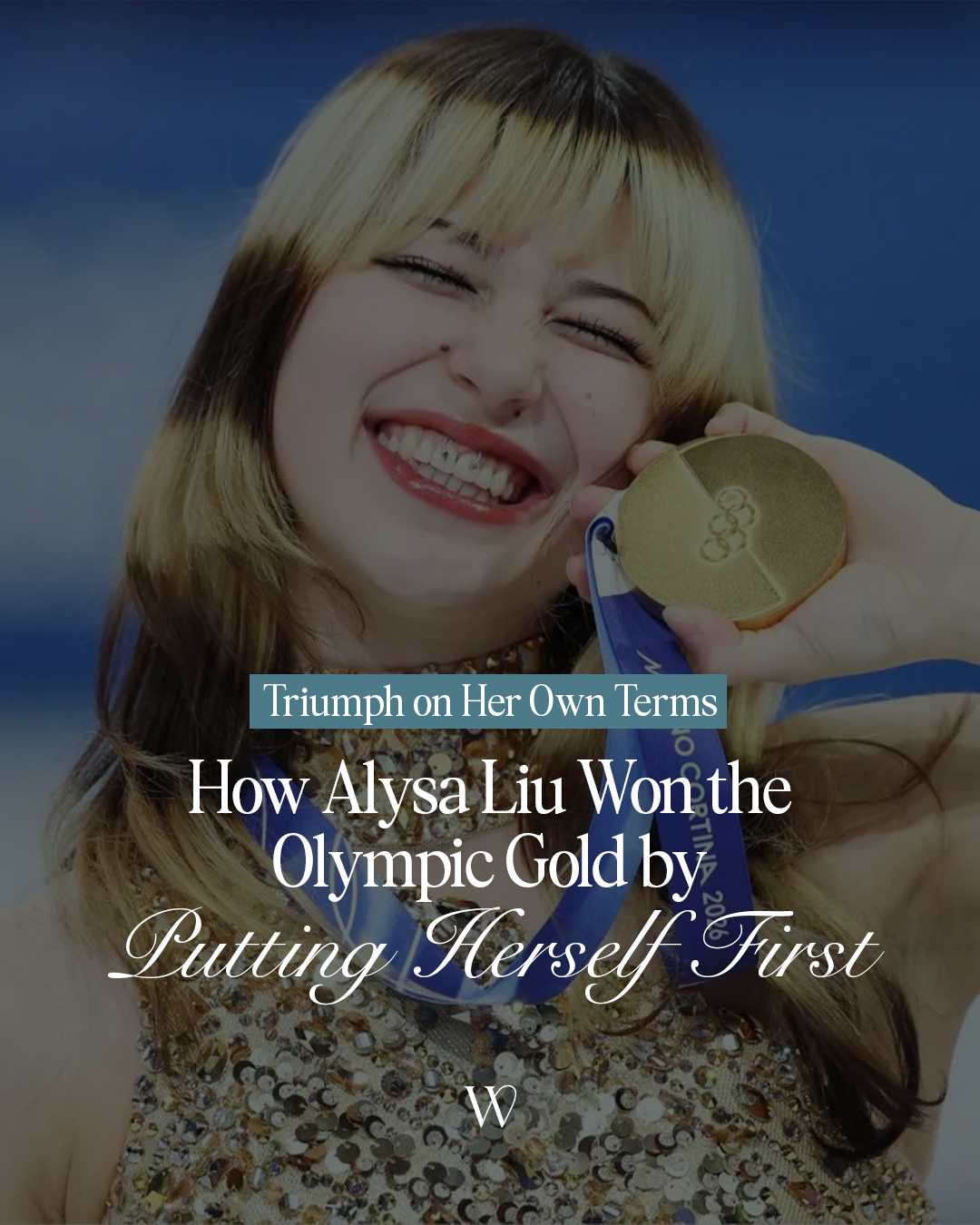

If you’ve gone online in the past few weeks, you’ve likely seen videos and photos of a female figure skater dressed in gold, an ethereal smile on her face as she glides and spins through the ice. Even if you’re not necessarily following updates from the 2026 Winter Olympics in Milan, you’ve probably heard of Alysa Liu’s gold-winning performance.
With her performance, Alysa gave the United States its first women’s singles gold in figure skating in 24 years, after Sarah Hughes’ win in 2002. But that’s not why Alysa’s performance went viral, and not why she emerged as one of the most celebrated athletes from the latest Olympics.
It’s because of the sheer joy that you can feel emanating from her during her performance, skating through the ice with a carefree aura that makes figure skating and landing a triple axel look easy. When she smiled on the rink, it seemed as if she was on her own and doing the routine for fun, except that it was on a world stage and she shared her winning performance with us.
And this joy didn’t come easy to Alysa.
Figure skating is a high-pressure sport, and like most sports, athletes start training at a young age if they want to pursue it competitively. Alysa’s story began like this, starting skating at the age of 5 and competing at age 7. Figure skaters also face extreme physical demands to perform difficult routines on ice gracefully, and are reported to experience psychological pressure related to body image, which contributes to high rates of burnout.
After finishing seventh (the highest placement among the US female figure skaters) in the 2022 Olympics in Beijing, Alysa announced her retirement.
“I was so into skating that I really didn’t do much else. Skating takes up your whole life… going to the rink, going home, competing. There were many, many times when I didn’t enjoy it.”
At just 16 years old, Alysa shocked the figure skating world by bowing out of the sport early.
During her retirement, she shared that her only plan was to live her life. Finally living like a normal teenager, she hung out with her friends, enrolled at UCLA, and even hiked to Mount Everest Base Camp.
She consciously spent time away from the ice rink, but surprisingly, it was another ice sport that brought her back to her original love.
“I went skiing for the first time. And I hadn’t felt that adrenaline rush since I’d quit skating,” Alysa shared on a US Figure Skating feature. “And so after I skied, I was like, ‘Wait, let me get on the ice and see what it feels like.’ At this point, I still wasn’t planning to return. I just wanted to skate again because I hadn’t stepped on the ice since I last got off for my last show. I just wanted to get back on and see how skates felt, the whole thing. During that first session, I tried the double Axel, and I could do it. I was like, ‘Oh.’”
While Alysa wanted to return to figure skating, she wanted to do so on her own terms.
In an interview with 60 Minutes, Alysa shared the boundaries that she set before returning to competitive figure skating.
“No one’s going to starve me and tell me what I can and can’t eat,” she shared. She also pushed for more control over her performances. She wanted to be the one to choose her own program music and help with the creative process of her programs. More importantly, she set a boundary that if she felt that she was skating too much, she would allow herself a break.
These clear boundaries, combined with a well-deserved break, allowed Alysa to rediscover her passion for figure skating. In a sport that pressures athletes to follow restrictive diets and have time for basically nothing else but training, Alysa’s boundaries helped her take better care of herself and still build a life outside of the sport.
And she was much better for it.
Because as we saw in her Olympic gold-winning performance, Alysa is now on the rink for the pure joy of it. With every shimmy she makes and every jump she lands, you can feel her pride.
Since she’s much more involved in her routines’ creative process, she now gets to choose program music that she actually listens to. Take her performance at the Olympic Exhibition Gala, in which she skated to PinkPantheress and Zara Larsson’s Stateside, even accidentally starting a TikTok dance trend with her moves.
In her media interviews following her Olympic win, Alysa reiterates the importance of taking a break when you need to and doing things with passion and not out of pressure.
“I’m only here because I like it,” she told NBC. “It would be a problem if I didn’t have joy.”
Sources:
- https://sports.yahoo.com/articles/u-figure-skater-alysa-liu-232321150.html
- https://usfigureskating.org/news/2026/2/20/national-team-figure-skating-liu-reigns-golden-in-milan.aspx
- https://usfigureskating.org/news/2024/10/7/rinkside-older-wiser-alysa-liu-returns-to-competition.aspx
- https://www.youtube.com/watch?v=6O3HLPWatuU
- https://mymodernmet.com/alysa-liu-figure-skating-olympian/
Bio:
Sanne is a marketer by profession and a writer by passion. When she’s not working, she’s either working through her TBR pile, planning her next trip, or forcing her cats to cuddle.