
As someone who was born near the start of the new millennium, I grew up with a lot of technology that is specifically geared for one function. From my mother’s film cameras to my pocket-sized MP3 player, my childhood home was filled with gadgets that did not have the “all-in-one” value that a lot of technology that we now have does. Our old TV couldn’t connect to the internet and play Youtube videos or music from Spotify. It only went through different channels, playing shows on a specific schedule. Our speakers didn’t have Bluetooth connection, and using them required a lot of colored wires, which I wasn’t completely knowledgeable about.
Eventually, they were replaced by more advanced technology, both out of necessity and because of how new things almost always meant “better” in everyone’s eyes. My old Hannah Montana MP3 player now sits in a box, along with all of my things I refuse to throw out of sentimentality, as I listen to music while scrolling through social media using only my phone. My mom doesn’t need to wait for weeks to see the pictures she took with her old camera anymore because her photos are in her phone’s gallery now.
Our lives have shifted in a way where many of the things we use on a daily basis offer the luxury of convenience. The multitude of steps you need to go through for things like listening to music, watching a movie, or connecting with other people has been reduced to a few taps on a screen or even a simple voice command. Efficiency was the goal and it has already been reached.
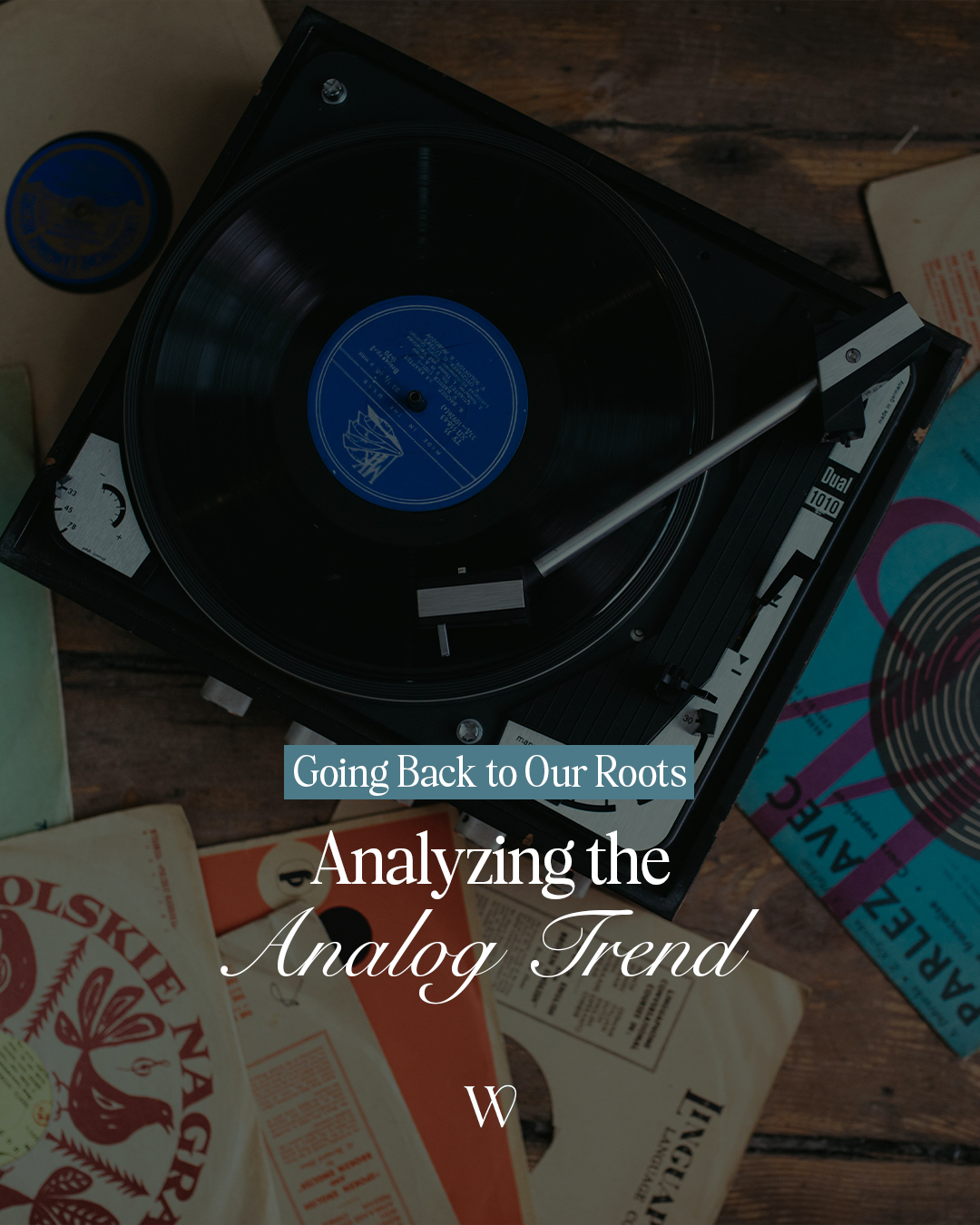
So imagine my surprise when one of the newest trends involved those “old” gizmos that were likely to have been stored in boxes and forgotten or thrown away without a care a few years back. If you scroll through Instagram, you’re likely to find a carousel of photos from your friend’s personal film camera roll or a reel about a lucky find of a vintage vinyl player. Maybe you’d even hear about how people are stocking up on DVDs so they can stop wasting money on their subscription fees for so many streaming platforms. This movement has been branded as “Going Analog.”
A Protest Against The Current Digital Landscape
You might find yourself wondering how this trend came to be. Wasn’t efficiency the point of all the innovations throughout the years? Why are we going back instead of forward? Well, it’s possible that the desire to make things easier for ourselves has brought up its own can of worms.
With everything within your fingertips, you’d be able to watch anything you want on your phone anytime, anywhere. But that also pulls you in a doomscrolling rabbit hole where short-form content constantly feeds you dopamine, which negatively impact your brain patterns in the long run. Apart from that, a study found that being chronically online also brings all sorts of problems like heightened attention-deficit symptoms, impaired emotional and social intelligence, technology addiction, social isolation, impaired brain development, and disrupted sleep.
This development has led to people wanting to break free from such harmful patterns, urging them to look for ways to combat their habits such as analog hobbies that do not require any screentime. An article from Forbes noted that the preference for analog equipment was also an act of defiance against the rise of AI technology, addicting social media algorithms, and efficiency. People are now aiming to live their lives in “simplicity, independence, and nostalgia.”
Another thing worth noting is how people have also been shifting away from subscription-based streaming platforms and returning to owning their own DVDs. Think about it: in order to watch a certain show or film, you would have to pay for a certain streaming site. However, not all of them are available on one site so you would have to pay multiple subscription fees per month just to watch the content you want. To make matters worse, their presence on the site isn’t permanent and they can randomly be removed anytime. Having physical copies of your favorite shows and films not only saves you money in the long run, but it also allows you to fully be intentional with the kind of content you want to see.
Being intentional is a factor that is being encapsulated by the analog trend, given that most of them only have one specific function. For instance, if you would want to listen to a certain song on a vinyl record, it would require you to move from your seat and actually go through your collection for that specific copy. Then you would have to turn your vinyl player on and place the record to actually listen to the song. While this is slower than just going on Spotify and pressing play, the additional steps allows you to be physically present, which gives a different kind of feeling than if you would go the easier route.
In this fast-paced world, the slow pace is a refreshing turn that allows you to be more present in your life. It allows you to feel more fulfillment in your daily life and gives you the chance to heighten your own experiences everyday.
Not Just a Trend—A Movement
It is refreshing to see the change in the mindset of people in recent years. While some fear that the turn to analog is a fleeting trend, I think its popularity uncovers the innate desire of people for something more.
Maybe it’s because people finally saw the negative effects that a fully efficient life can give. After all, humans are not made to just endlessly scroll through mindless content or continuously crave the dopamine rush. We’re meant to be physically present and not just live our lives through the screen that desperately wants us to keep engaging. The fast-paced world shouldn’t stop us from slowing down and connecting with one another in a far deeper manner.
After all, the analog trend isn’t just going around for the sake of making you buy a secondhand film camera or learn how to knit or start a junk journal. It simply opens the idea of living life in a satisfying manner through the art of being intentional and physically present everyday, not just for the people around you, but also for yourself.
Sources:
- Why Owning Nothing Is So Expensive (Business Insider) – https://www.youtube.com/watch?v=8AKn-zJMIwY&t=929s
- 2026 Is The Year Of ‘Analog’ Living—How Will This Impact Fashion? (Forbes) – https://www.forbes.com/sites/elizabethgracecoyne/2026/01/11/2026-is-the-year-of-analog-living-how-will-this-impact-fashion/
- Brain health consequences of digital technology use – https://pmc.ncbi.nlm.nih.gov/articles/PMC7366948/#:~:text=Abstract,may%20improve%20mood%20and%20behavior.
Bio:
Ever since she was nine, Abigail Adriatico has always known she’d be a writer. Decades later, her love for the craft has led to a degree in Communication from the University of Santo Tomas, and hundreds of written pieces kept in old notebooks, literary folios, news publications, and even geeky websites you’ve probably never heard of. With a bulky bag filled with sentimental trinkets and a mind buzzing with a plethora of random ideas, you’ll most likely find her in the corner of the room, writing her heart out on her notes app or on the first piece of paper she can grab—unless she finds you first. Then you’ll probably figure out why some people call her “a bee.”