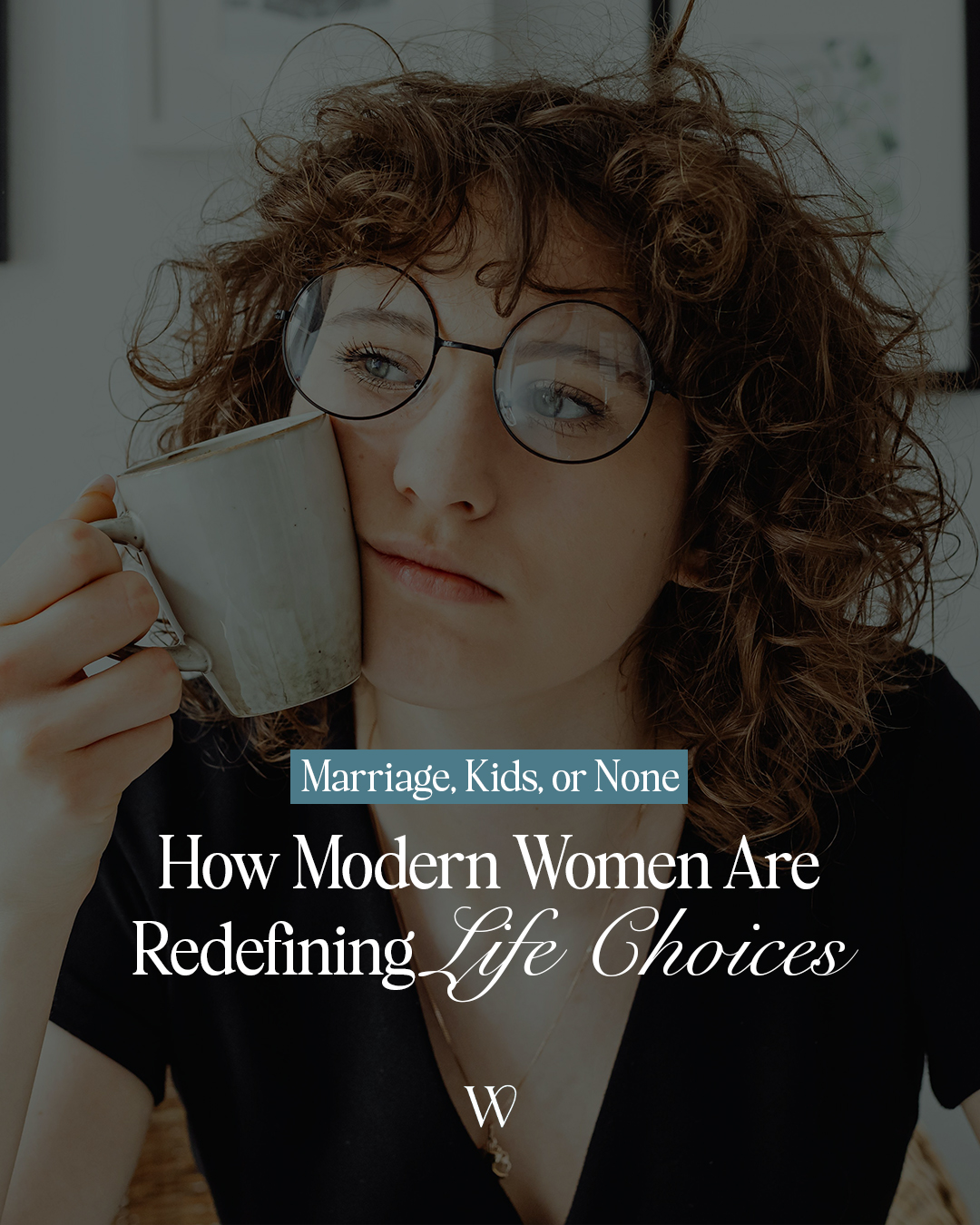

Being a woman, I grew up with specific life instructions to follow: study, graduate, marry by your 20s, have kids shortly after, and repeat. As I got closer to 30 and was still single, people put more pressure on me to get married and questioned my life decisions. Such pressure made me think deeply: Who decided this, and do I actually want it?
That question explains a lot of what’s happening right now. And it turns out, I’m far from alone.
Millions of women around the world are asking the same thing. And the shift isn’t just cultural, it’s statistical.
Here’s what’s driving the change:
- I’m Marrying Later, If at All
Putting aside the societal pressure, I don’t mind marrying ‘late’. My friends and I agree that marriage is a significant decision for a woman, and it must not be taken lightly, as there are many things to consider, including changing attitudes toward partnership, independence, and long-term commitment.Global data from the UN and the OECD show that the average age at first marriage for women has risen by 4–6 years, mainly because more women pursue higher education and financial independence. In many developed countries, first marriages now happen in the early 30s rather than the early 20s. - Education Changed My Priorities
Research consistently shows that women with higher education levels delay marriage and motherhood. Women don’t spend their educational years just to get married. Most of us prioritize education for career stability before making permanent life decisions. - My Career Isn’t a Phase, It’s the Plan
Women’s participation in the global workforce continues to rise, and like many women, I plan my 20s and 30s around career growth rather than relationship milestones. Financial independence doesn’t just happen, I chose it. For me, building my life comes before creating a family. - The Reality of Motherhood
According to global time-use studies, women continue to perform about 2–3 times more unpaid care and domestic work than men, even when working full-time. I’ve already experienced free babysitting for my nieces and nephews, and it was enough for me to realize how heavy motherhood is. That reality weighs heavily on me.
It makes the decision to have children not just an emotional one, but also a practical one. Choosing motherhood today often means choosing more unpaid labor, and I’m allowed to think carefully about that. - Money Matters More Than We Admit
Housing prices, childcare fees, healthcare costs, and education expenses have all risen faster than wages. Surveys show women increasingly cite financial readiness as a key factor in deciding if and when to marry or have children. Love shouldn’t come empty-handed. Neither do bills, and I’m tired of pretending they don’t matter. - Being Child-Free Feels Like a Valid Choice
More women now say they feel fulfilled through careers, friendships, creative work, travel, and chosen families. I see that reflected in my own life. Happiness doesn’t come in one standard format, no matter how often society tries to sell it that way. My own happiness matters more than others’. - My Mental Health Matters More Than a Timeline
I’m part of a generation of women prioritizing autonomy, emotional compatibility, and well-being over social pressure. I’d rather be single or child-free than stretched thin, burnt out, or unhappy just to meet someone else’s expectations. The pressure to “have it all” has shifted into something more honest: having what actually works for me.
As one woman said, “I’m not rushing love—I’m busy thriving first.” Another put it perfectly: “I’m not single. I’m in a committed relationship with my own life.” And as people ask me about relationships or marriage, I just simply answer, “I don’t want another problem.”
I’m not rejecting marriage or motherhood. I’m rejecting default decisions. Whether I choose marriage, kids, both, or neither, one thing is clear: I’m designing a life that fits me, not what others say.
And honestly? The most important commitment I’ve made so far is to my own choices.
Bio:
Paula Mae Caparic is a writer who can write about almost anything, especially if it sparks a question worth asking. Her work blends research, cultural analysis, and personal insight, often with a sense of humor.