
Within the glitz and glamour of the film industry, many stories from unlikely places have been given the spotlight. From fictional worlds where magic and mystical creatures coexist to relatable tales of the everyman’s daily life in the city, films tackle these narratives, utilizing the medium to capture themes and lessons for their audiences to consume. People then take these stories to heart, with some being forever changed by certain scenes or lines of dialogue.
However, that begs the question of how a particular story is framed and what perspectives are left unseen. You see, a film’s approach to a certain story is often influenced by the people behind the camera and throughout the decades, the ones at the forefront of the industry have predominantly been male filmmakers.
Since various factors—such as the director’s vision and the script’s flow—affect a film’s overall tone, perspective, and even the plot it wishes to convey, the industry has been riddled with stories told only from the standpoint of these men, leaving little room for women to share their own.
Taking On The Director’s Chair
Fortunately, there’s been a shift in the industry. The previous decades have seen more women making waves by creating films that tackle both ordinary and unconventional stories, banking on their creativity and unique vision to evoke powerful emotions among their audiences.
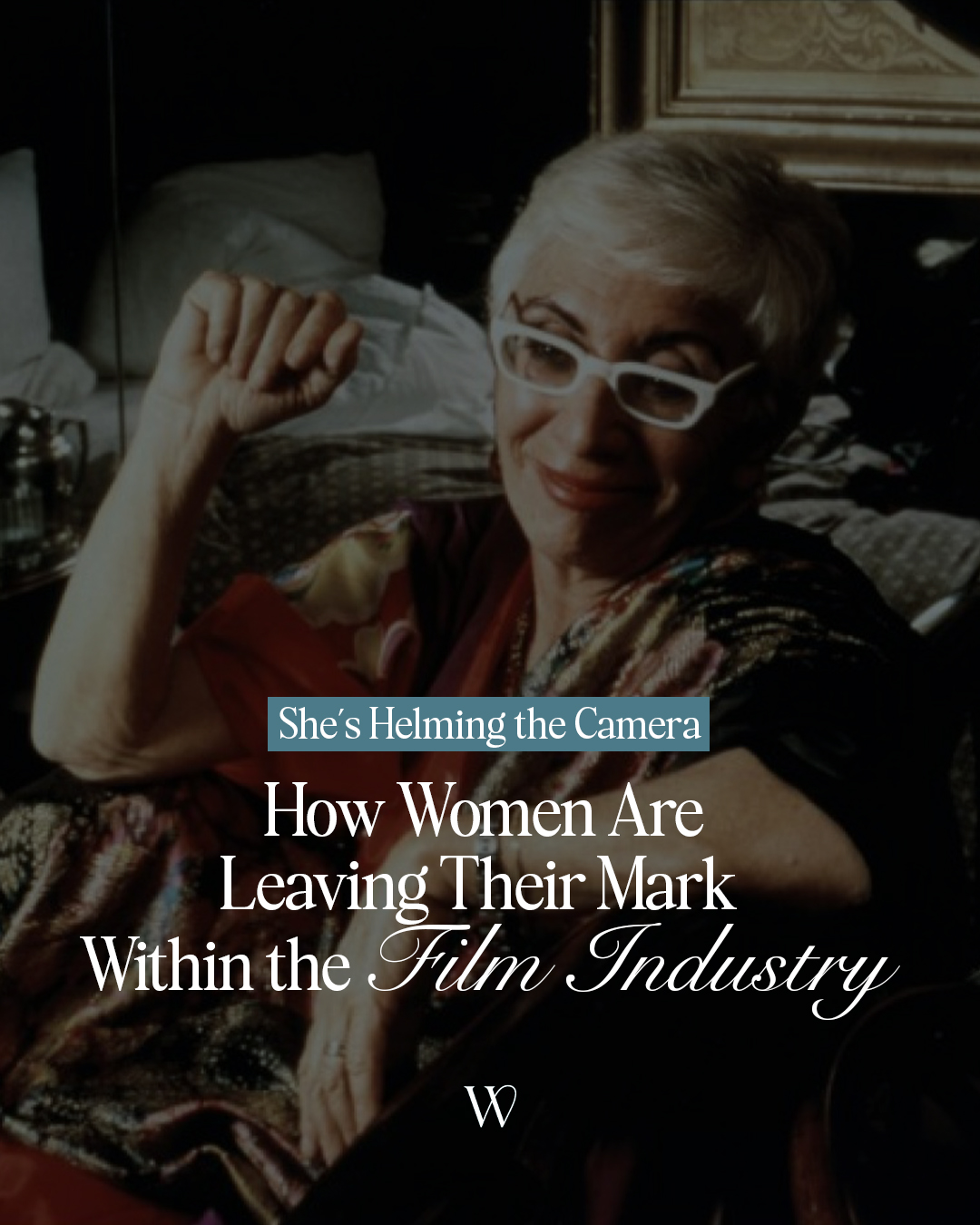
Take, for example, the first woman who had ever been nominated for an Oscar—Italian filmmaker Lina Wertmüller. During the 49th Academy Awards, Wertmüller received a nomination for the Best Director and Best Screenplay awards for her 1976 film Seven Beauties, which explored the horrors of war and the lengths people will go just to survive. Another notable feat was American filmmaker Kathryn Bigelow’s historic Best Director win during the 82nd Academy Awards for her 2008 film The Hurt Locker, making her the first woman to ever win the accolade.
It’s admittedly sad to see that it is rare for women to receive these coveted awards despite being good in their craft. However, that has not stopped them from pushing forward and making commendable breakthroughs through their films.
While it was still a struggle for them to garner recognition in prestigious award-giving bodies, many women directors would create cult classics that are still talked about to this day. Titles such as Amy Heckerling’s Clueless (1995), Gillian Armstrong (1994) and Greta Gerwig’s (2019) film adaptations of Little Women, Andrea Arnold’s Fish Tank (2009), Céline Sciamma’s Portrait of a Lady on Fire (2019), and hundreds of others have cemented the idea that women have the skills to create thought-provoking films that leave a lasting impact to its audiences.
Pushing Boundaries in 2025
Despite 2025 seeing a drop in the number of female directors who helmed the top 100-grossing films, women continued to put out some of the most impactful titles for the year.
Maggie Kang, a South Korean-Canadian filmmaker, was the creator and co-director of the Netflix hit film KPop Demon Hunters (2025), which recently won the Best Motion Picture – Animated category at the 83rd Golden Globes. Meanwhile, Chinese-born filmmaker Chloé Zhao—who was also the second woman to ever win the Oscar award for Best Director during the 93rd Academy Awards—was recognized for her latest film Hamnet (2025), which took home the Best Motion Picture – Drama award at the same award show.
Canadian filmmaker Samantha Quan was recognized for her work as a producer in Anora (2024), which took home numerous awards from the 97th Academy Awards, including Best Picture. French filmmaker Coralie Fargeat also received numerous nominations at the same awards show for her second feature film, The Substance (2024), making her the 10th woman to ever be nominated for the Best Director category.
Meanwhile, in the Philippines, filmmaker Antoinette Jadaone’s controversial coming-of-age film Sunshine (2024) was part of the 2025 Berlin International Film Festival’s Generation 14plus section, where it won the Crystal Bear for the Best Film category. As it received several nods in other international film festivals, it was also shortlisted for the country’s submission to the 98th Academy Awards’ Best International Feature Film category. It was also the only Filipino film included in Letterboxd’s 2025 Year In Review List.
Filmmaker Baby Ruth Villarama has also made waves with her documentary film Food Delivery: Fresh from the West Philippine Sea (2025), which revolves around the problems faced by Filipino fishermen, navy, and coast guard personnel amidst the conflict surrounding maritime claims in the West Philippine Sea. Despite being initially withdrawn at the 2nd CinePanalo Film Festival in 2024 because of “unnamed external factors, the film premiered at the 20th DocEdge Festival in New Zealand, where it won the Tides of Change Award.
It goes without saying that women have been largely contributing to the growth of the film industry, be it in the foreign or local space. Their passion and love for the craft have paved the way for stories to be told with unique perspectives, showcasing a sense of vulnerability and honesty that can genuinely connect with the hearts and minds of audiences.
Admittedly, there is still a long way to go in ensuring that the talents and efforts of women filmmakers are recognized. But with the grit and perseverance that they show within the stories they bravely tell each year, they’re surely off to a great start.
Sources:
- Inclusion in the Director’s Chair: Analysis of Director Gender and Race/Ethnicity Across the 1,900 Top Films from 2007 to 2025: https://mcusercontent.com/62568938b3a09a6ef20bd8b14/files/606c81e1-ab89-e748-5b42-d45200cb79b7/Inclusion_in_the_Director_Chair_2025.pdf
- ‘Pelikula at Pilipina’: Two female directors reawaken ‘dying’ Philippine cinema (ABS-CBN): https://www.abs-cbn.com/entertainment/showbiz/movies-series/2025/8/4/-pelikula-at-pilipina-two-female-directors-reawaken-dying-philippine-cinema-1227
- Top-Grossing Films Directed By Women Take Steep Drop In 2025, Report Finds (Deadline): https://deadline.com/2025/12/women-directors-films-2025-study-1236659228/
- ‘KPop Demon Hunters’ Took 7 Years to Make but a Lifetime of Experience (New York Times): https://www.nytimes.com/2025/07/21/movies/kpop-demon-hunters-directors.html
- The 2010s—Top Women-Directed Feature Films: https://letterboxd.com/crew/list/the-2010s-top-women-directed-feature-films/
- All the women who have been nominated or won the Oscar for best directing (ABC News): https://abcnews.go.com/GMA/Culture/women-nominated-won-oscar-best-directing/story?id=118943429
- The dA-Zed guide to cult female filmmakers (Dazed): https://www.dazeddigital.com/artsandculture/article/25129/1/the-da-zed-guide-to-cult-female-filmmakers
- In 2025, The State of Philippine Cinema is as Exciting as it is Confusing (Rolling Stone Philippines): https://rollingstonephilippines.com/culture/philippine-cinema/2025-in-review-philippine-cinema/
- Banned in Manila, Premieres in NZ: The West Philippine Sea Film That Couldn’t Be Silenced (Asia Media Centre): https://www.asiamediacentre.org.nz/banned-in-manila-premiered-in-aotearoa-the-west-philippine-sea-film-that-couldn-t
Bio:
Ever since she was nine, Abigail Adriatico has always known she’d be a writer. Decades later, her love for the craft has led to a degree in Communication from the University of Santo Tomas, and hundreds of written pieces kept in old notebooks, literary folios, news publications, and even geeky websites you’ve probably never heard of. With a bulky bag filled with sentimental trinkets and a mind buzzing with a plethora of random ideas, you’ll most likely find her in the corner of the room, writing her heart out on her notes app or on the first piece of paper she can grab—unless she finds you first. Then you’ll probably figure out why some people call her “a bee.”